
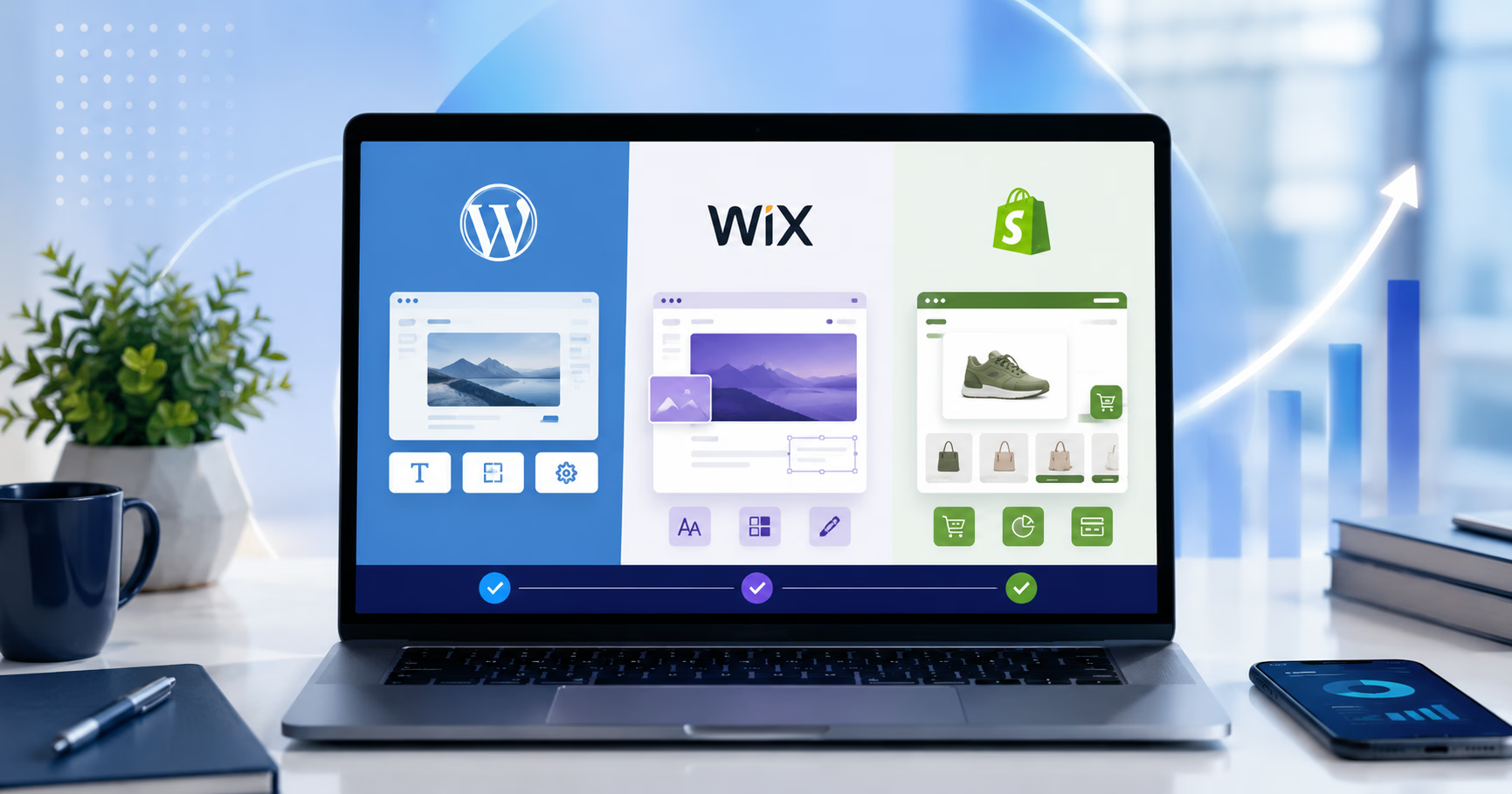
WordPress vs Wix vs Shopify: Which Website Platform Is Best for Your Business?
If you're starting a business website, one of the first questions you'll run into is this: which platform should you actually build it on? It sounds like a small decision. It isn't. The platform you choose shapes how your site looks, how it performs on Google, how easily you can grow it later, and how much you'll spend keeping it alive. Choose well, and your website becomes a real business asset. Choose poorly, and you'll likely end up rebuilding it within a year or two usually right when you can least afford the time. WordPress, Wix, and Shopify dominate this conversation for good reason. They're popular, well-supported, and each one does something exceptionally well. But they're not interchangeable. The right answer depends entirely on what kind of business you're building. Let's break it down properly.
A Quick Look at All Three Platforms
Before getting into the details, here's the short version of what each platform is really for. WordPress is the most flexible option of the three. It powers a huge chunk of the internet everything from small blogs to enterprise websites. If you want full control, strong SEO, and the freedom to scale without hitting a wall, this is usually where the conversation starts. Wix is a drag-and-drop website builder aimed at non-technical users. It's the easiest of the three to get started with, and it's perfect for people who just need something simple online quickly. Shopify is built for one thing selling products online and it does that job better than almost anything else. If e-commerce is the core of your business, Shopify earns serious attention. Each platform is great. But only for the right kind of project.
WordPress: The Strongest Choice for Long-Term Growth
WordPress tends to be the go-to platform for businesses that plan to grow. It gives you a level of control that the others simply can't match, and that control becomes more valuable the bigger your business gets.
Here's where WordPress really stands out:
-
SEO depth. You can shape almost every signal Google cares about metadata, URLs, schema, internal linking, page structure, performance. Pair it with a plugin like Rank Math or Yoast and you have a serious SEO setup.
-
Design freedom. Thousands of themes are available, and if none of them suit you, a developer can build something custom from scratch. Your site can look exactly how you want it to look.
-
A massive plugin library. Need booking forms, memberships, multilingual support, or a full online store via WooCommerce? There's a plugin for it, usually several.
-
Built for content. WordPress started life as a blogging platform, and it shows. For service businesses, consultants, and brands that want to grow through content and search, it's hard to beat.
-
Real ownership. Your site, your hosting, your data. You're not renting space on someone else's platform
.
The honest trade-off is that WordPress isn't fully hands-off. Updates, backups, security, and performance all need attention either from you or from a development partner. That's the price of flexibility. Done properly, though, you end up with one of the most powerful websites you can build today.
Wix: The Simplest Way to Get Online
Wix is the platform we recommend when speed matters more than scale. If you want a clean, presentable website live in a few days, and you'd rather not deal with hosting or technical setup, Wix makes a lot of sense. What works in its favor:
A genuinely intuitive drag-and-drop builder
- Plenty of ready-made templates
- Hosting is bundled, so there's nothing to manage on the back end
- Great for portfolios, personal brands, and small local businesses
- Easy enough that non-technical owners can make their own edits later
That said, you should know where Wix tends to fall short. Customization stops at what the builder allows. SEO works fine for simple websites but starts to feel restrictive in competitive niches. And if you ever want to migrate to another platform later, your content doesn't transfer cleanly which means a rebuild. It's a smart choice for the right project, just not the right choice for every project.
Shopify: Purpose-Built for Selling Online
If your business is built around selling products, Shopify deserves a serious look. It was designed for e-commerce from day one, and that focus shows in how naturally everything fits together. :
You Get
- A clean product and inventory management system
- Built-in checkout and payment gateways
- Shipping integrations and tax handling
- A large app store for extending features
- Solid sales and customer analytics
- Support for physical, digital, and subscription products
Where Shopify isn't the right fit is when selling products isn't the main goal. If you run a service business, a blog-led brand, or a corporate website, Shopify is overkill you'd be paying monthly for features you'll never use. It's also worth budgeting realistically: between subscription tiers, transaction fees, and paid apps, costs can climb faster than people expect once a store starts scaling.
WordPress vs Wix vs Shopify: How They Really Compare
When you put the three side by side, the differences become pretty clear. WordPress wins on flexibility, design freedom, SEO depth, and long-term scalability but it asks for more attention along the way. Wix is the easiest to launch and manage, with hosting and updates handled for you, but you trade away customization and serious growth potential. Shopify sits in its own lane: not the most flexible platform out there, but unmatched when the goal is running an online store. It really comes down to what you're optimizing for. If it's long-term growth and SEO, WordPress leads. If it's speed and simplicity, Wix makes sense. If it's selling products online, Shopify is the obvious pick.
Which Platform Wins on SEO?
This is where business owners often get tangled up, so let's keep things practical.
WordPress offers the deepest SEO control of the three. You can shape your URLs, metadata, schema, internal links, and content structure in fine detail. Paired with the right plugins and a thoughtful content strategy, it gives you everything you need to compete at a serious level provided someone sets it up properly. Wix has come a long way over the years. It handles the basics well, and for small or local sites it's perfectly fine. But once you start competing for higher-volume keywords or running a content-heavy strategy, you'll notice the ceiling. Shopify is strong specifically for e-commerce SEO. Product pages, collections, and store structure are organized sensibly out of the box. To actually rank, though, you still need to put work into descriptions, page speed, supporting content, and authority over time. One thing worth saying clearly: no platform will rank you by itself. SEO results come from the combination of platform, content, technical setup, page speed, mobile experience, internal linking, schema, and consistent optimization over time. The platform is the foundation what you build on top of it matters more
.
Which Platform Is Better for E-Commerce?
If your business revolves around selling products, Shopify is usually the most efficient choice. It's built for the job, and almost every feature exists to make selling smoother.
WordPress with WooCommerce is the better fit when you want deeper customization, full ownership of your store, or a strong content marketing strategy running alongside your shop. It takes more setup, but the flexibility pays off, especially as your brand grows. Wix can handle a small store with a limited catalog, but once you're serious about scaling, running campaigns, or managing complex product ranges, it starts to feel limiting. Which Platform Is Better for Business Websites? For service-based businesses agencies, consultants, restaurants, real estate firms, clinics, and corporate brands WordPress is usually the strongest pick. It comfortably handles service pages, lead-generation funnels, blogs, landing pages, and long-term SEO under one roof. Wix can work well for very small businesses that just need a clean, simple online presence a homepage, a couple of service pages, a contact form. Shopify only makes sense here if selling products is genuinely central to what you do. Otherwise, you're paying for tools you won't use.
Common Mistakes Businesses Make When Choosing a Platform
We see the same mistakes again and again. A few worth flagging:
-
Choosing on price alone. The cheapest platform now can easily become the most expensive one later if it limits your growth.
-
Ignoring where the business is heading. Pick for where you want to be in two or three years, not just where you are this week.
-
Treating SEO as an afterthought. A beautiful site nobody can find isn't really an asset.
-
Piling on plugins or apps. Every extra tool adds weight, complexity, and another thing that can break.
-
Skipping the limitations. Every platform has them. Find out what they are before you commit, not after.
-
Skipping the planning stage. A clear sitemap and content plan upfront saves months of rework later.
-
Treating speed, mobile, and security as optional. They aren't they affect rankings, conversions, and trust.
So, Which One Should You Actually Choose?
There's no universal answer, but the right call usually becomes obvious once you're honest about your priorities. Go with WordPress if you want flexibility, SEO control, blogging, custom design, and a site that can grow with you for the long haul. Go with Wix if you need something simple, quick, and easy to manage on your own, without much technical involvement. Go with Shopify if selling products online is the core of your business. The right platform is the one that fits your business model not the one that happens to be trending.
How Webcore Solutions Can Help
At Webcore Solutions, this is the kind of decision we help businesses make every week. Whether you're starting from scratch, switching platforms, or trying to fix a site that isn't pulling its weight, we can guide you through it and build something that actually performs. Here's what we work on day to day:
- WordPress website development
- Shopify store development
- Wix website setup
- Custom website development
- E-commerce website development
- SEO optimization
- Website redesign
- Speed optimization
- Mobile responsive design
- Website maintenance and support
- Platform consultation and strategy
Our focus isn't just building good-looking websites. It's building websites that load fast, rank well, convert visitors, and keep working hard for your business long after launch day.
Final Thoughts: The Best Platform Is the One That Fits Your Business
WordPress, Wix, and Shopify are all strong platforms. None of them is bad. The smart move is matching the platform to your business model, your growth plan, and the kind of website your customers actually need. Take the time to think it through, pair the right platform with the right execution, and your website will keep paying you back for years. Need help deciding between WordPress, Wix, or Shopify? Webcore Solutions can guide you through the choice, design your website, optimize it for search, and build a professional online presence that actually supports your business growth. Get in touch with our team at www.webcoreuae.com to start the conversation.
Ready to build?
Let's turn the idea into something shipped.