
Introduction
AI is no longer just helping developers, it's working alongside them. From writing entire features to debugging complex systems, modern AI coding tools have reshaped how software gets built, how websites get launched, and how businesses automate their digital operations.
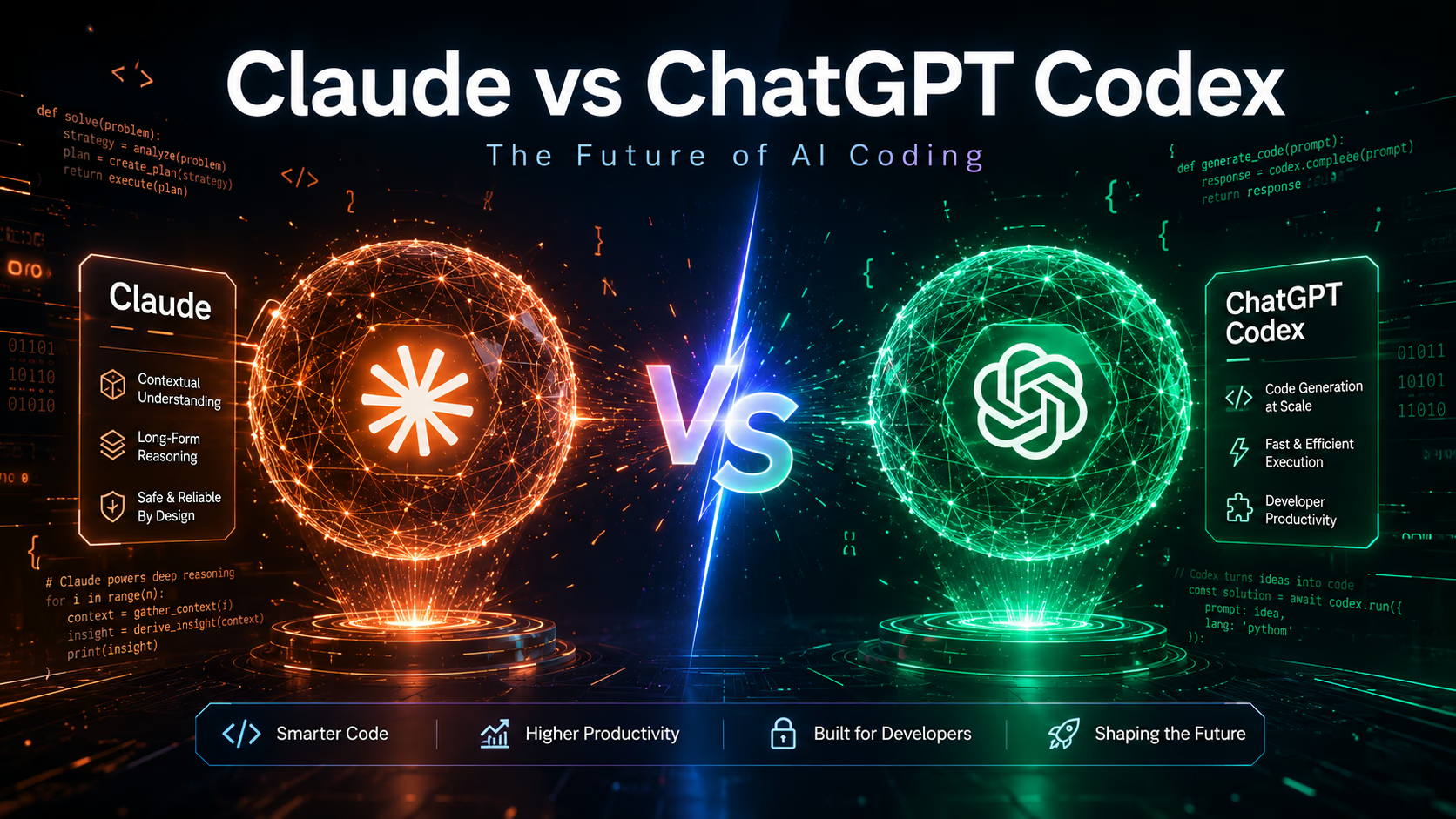
Two names dominate the conversation in 2026: Claude by Anthropic and ChatGPT Codex by OpenAI. Both are powerful. Both are widely used. But they're built with different philosophies, and choosing the right one can directly impact your development speed, code quality, and overall business productivity.
In this guide, we'll break down Claude vs ChatGPT Codex in a clear, practical way, so developers, startups, and business owners can decide which AI coding assistant truly fits their needs.
What Is Claude?
Claude is Anthropic's flagship AI model family, known for deep reasoning, long-context understanding, and natural conversation. For developers, the more relevant product is Claude Code, Anthropic's agentic coding tool that runs directly in your terminal.
Unlike traditional autocomplete tools, Claude Code reads your entire codebase, plans an approach, edits files across your project, runs tests, and commits changes through natural language instructions. It's powered by Claude's latest models, which support a context window large enough to process entire repositories, legal documents, or long technical specifications in a single prompt.
Claude tends to shine in areas like:
- Understanding large, complex codebases
- Explaining what code does in plain language
- Multi-file refactoring and planning
- Technical documentation and structured writing
- Debugging with clear reasoning behind each fix
For teams that value clarity, depth, and thoughtful execution, Claude is often the go-to choice.
What Is ChatGPT Codex?
ChatGPT Codex is OpenAI's coding agent, designed specifically to help developers write, review, and ship code at scale. Originally released as Codex CLI in 2025 and significantly expanded since, Codex now works across multiple surfaces, including a desktop app, terminal CLI, IDE extensions, the ChatGPT web app, and mobile.
What makes Codex stand out is its cloud-based, parallel execution model. Each task spins up an isolated sandbox preloaded with your repository, where Codex can read and write files, run tests, and propose pull requests autonomously. Developers can run multiple agents in parallel, completing what used to take weeks of work in just days.
Codex is particularly strong at:
- End-to-end feature implementation
- Large refactors and migrations
- Automated pull request workflows
- Cloud-based, parallel coding tasks
- Long-horizon engineering work
For teams focused on shipping fast and integrating AI into real GitHub workflows, Codex is a serious contender.
Claude vs ChatGPT Codex: The Main Differences
Both tools are agentic, meaning they can take action on your behalf, not just suggest code. But they approach the job differently.
Code understanding: Claude leans toward deep reasoning and explanation, often producing clearer rationale for the changes it makes. Codex leans toward execution speed and getting working code shipped.
Multi-file project work: Both handle multi-file work well, but Claude's large context window makes it especially strong on legacy or monorepo-style projects. Codex's parallel cloud agents make it efficient for handling many tasks at once.
Writing quality: Claude is widely considered stronger for documentation, planning docs, and any task where written communication matters as much as the code itself.
Developer workflow: Codex integrates deeply with GitHub and ChatGPT, making it natural for teams already inside the OpenAI ecosystem. Claude Code fits beautifully into terminal-first workflows and works with any editor you already use.
Ease of use for non-technical users: Claude tends to feel more conversational and forgiving with vague instructions, which makes it easier for less technical users to work with.
Which One Is Better for Coding?
There's no single winner, and anyone claiming otherwise is oversimplifying.
Claude Code is often the better pick when you need careful reasoning, deep codebase analysis, clear explanations, and high-quality refactors. It's especially good for understanding unfamiliar codebases and planning before executing.
ChatGPT Codex tends to win when the goal is pure development throughput, implementing features, shipping pull requests, and running many coding tasks in parallel in the cloud.
If your work involves complex thinking, Claude usually feels smoother. If your work involves shipping a lot of code quickly, Codex is hard to beat.
Which One Is Better for Businesses?
From a business owner's perspective, the question isn't just "which tool writes better code." It's "which tool helps my business grow faster, more reliably, and at lower cost."
For website development, automation, and software maintenance, both tools deliver strong results, but the right fit depends on your team's structure. A small business with a lean development team might prefer Claude for its clarity and ability to handle a wide range of tasks beyond just code, including documentation, SEO content, and strategy. A larger development organization shipping frequent updates might prefer Codex for its parallel agent workflows and tight GitHub integration.
For internal tools, technical documentation, and digital growth tasks, Claude often provides better all-around value. For high-volume development pipelines, Codex offers serious productivity gains.
Claude vs ChatGPT Codex: Comparison Table
| Feature | Claude / Claude Code | ChatGPT Codex | Best Choice |
|---|---|---|---|
| Deep reasoning & explanation | Excellent | Good | Claude |
| Large codebase understanding | Excellent (1M token context) | Strong | Claude |
| Multi-file refactoring | Excellent | Excellent | Tie |
| Parallel coding tasks | Limited | Excellent (cloud sandboxes) | Codex |
| GitHub & PR workflow | Good | Excellent | Codex |
| Documentation & writing | Excellent | Good | Claude |
| Speed of execution | Strong | Very Fast | Codex |
| Terminal / CLI experience | Excellent | Excellent | Tie |
| Ease for non-developers | Excellent | Good | Claude |
| Ecosystem integration | MCP + growing plugins | GitHub + ChatGPT ecosystem | Depends on stack |
Pros and Cons
Claude / Claude Code
Pros: Exceptional reasoning, very large context window, strong at explanations and documentation, fewer hallucinations, smooth terminal experience, accessible for non-technical users.
Cons: Less optimized for high-volume parallel cloud tasks, smaller plugin ecosystem compared to OpenAI's, can occasionally be slower for simple execution tasks.
ChatGPT Codex
Pros: Powerful cloud-based agent model, parallel task execution, tight GitHub integration, multiple surfaces (CLI, IDE, web, mobile), strong for shipping production code at speed.
Cons: Limited mid-task intervention in some workflows, requires careful review of autonomous changes, can feel less conversational for non-developers.
Note: Features, pricing, and availability for both tools evolve quickly. Always check the official Anthropic and OpenAI websites before making a final decision.
Final Verdict: Which One Should You Choose?
Choose Claude if you need deep reasoning, explanation, planning, content, documentation, and complex multi-step thinking, especially when working with large or unfamiliar codebases.
Choose ChatGPT Codex if your priority is coding-agent workflows, automated pull requests, parallel development tasks, and shipping production code at speed.
For serious businesses and engineering teams, the smartest approach is often to use both. Claude handles thinking, planning, and explanation. Codex handles execution at scale. Together, they cover the full development lifecycle.
How WebCore Solutions Uses AI in Real Projects
At WebCore Solutions, we use modern AI tools like Claude and ChatGPT Codex inside structured, expert-led workflows. They help us accelerate web development, automate repetitive tasks, improve code quality, and deliver digital strategies faster, but they never replace experienced planning, testing, and human review.
Our team blends AI productivity with real engineering discipline to build websites, software, and automation systems that perform reliably for clients across the UAE, UK, USA, Europe, and Pakistan. The goal isn't to use AI for the sake of it. The goal is smarter, faster, more dependable digital products.
Conclusion
AI coding tools are powerful, but they aren't magic. The businesses that win with them are the ones that use them wisely, with the right people, the right processes, and the right strategy in place. Whether you choose Claude, ChatGPT Codex, or both, the real value comes from how thoughtfully these tools are integrated into your workflow.
If you're exploring how AI can speed up your software development, website projects, or digital operations, WebCore Solutions can help you build a smart, future-ready approach.
Ready to bring AI-powered development into your business? Partner with WebCore Solutions and let's build something faster, smarter, and built to scale.
Ready to build?
Let's turn the idea into something shipped.